The Crisis
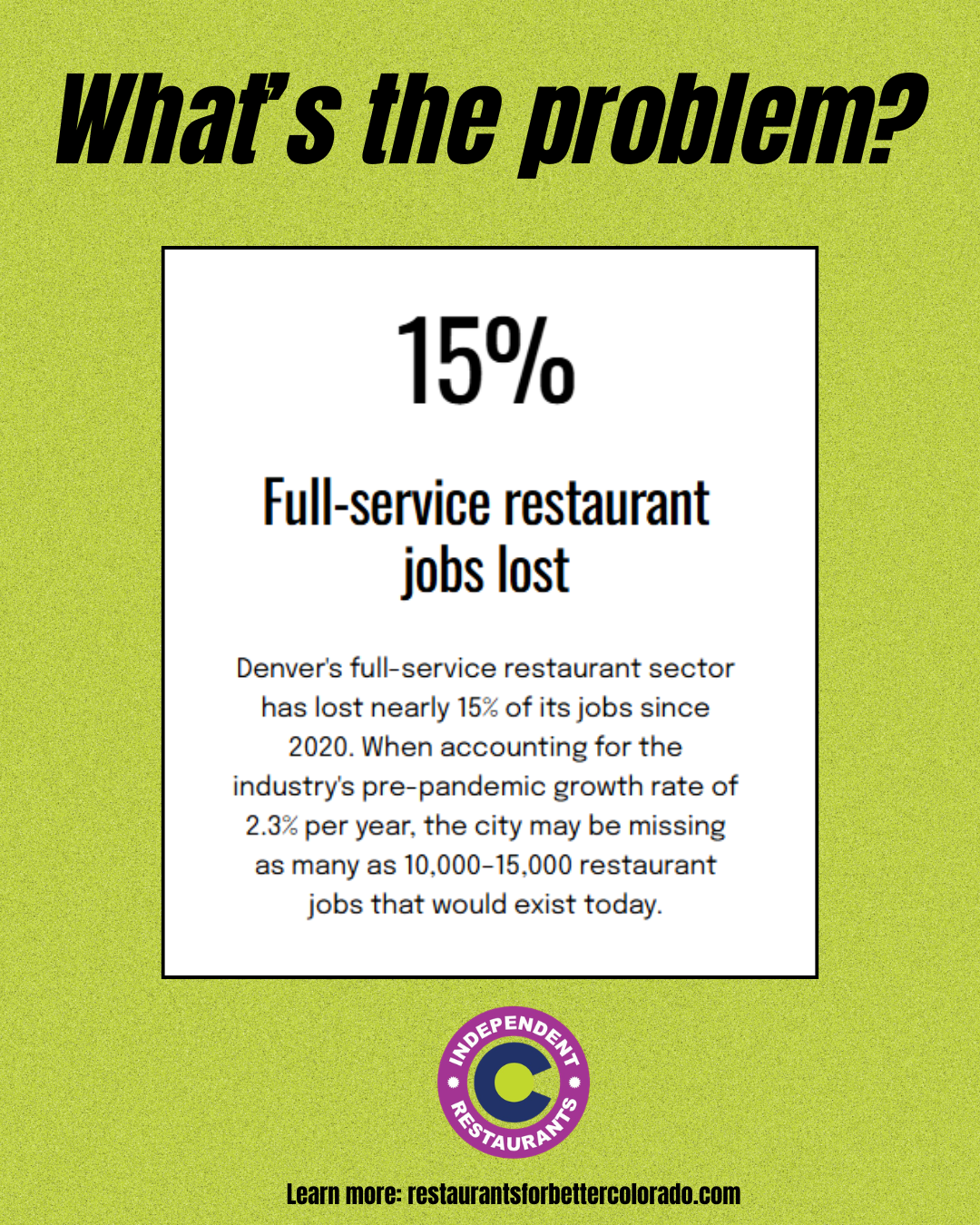
15%
Full-service restaurant jobs lost
Denver's full-service restaurant sector has lost nearly 15% of its jobs since 2020. When accounting for the industry's pre-pandemic growth rate of 2.3% per year, the city may be missing as many as 10,000–15,000 restaurant jobs that would exist today.
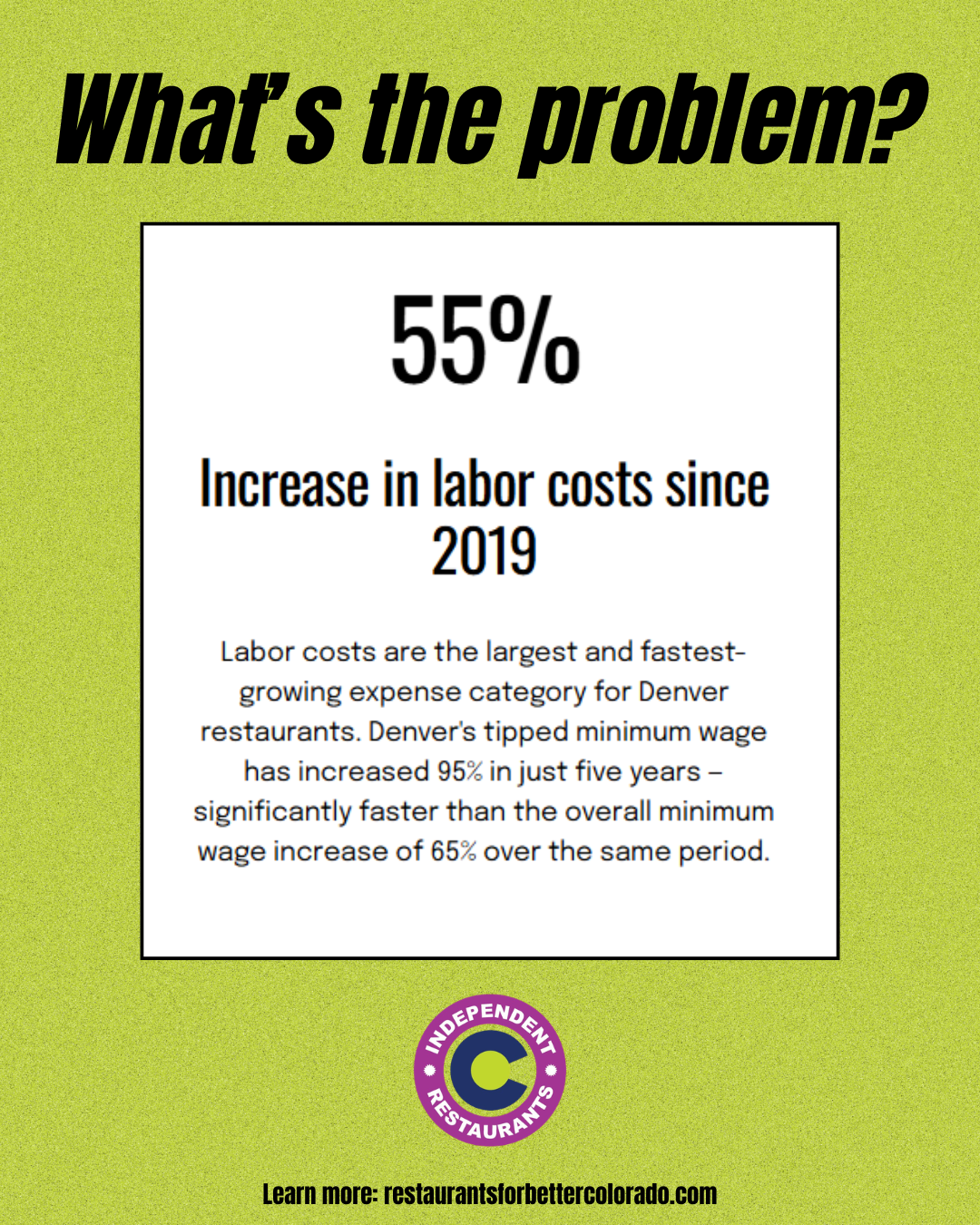
55%
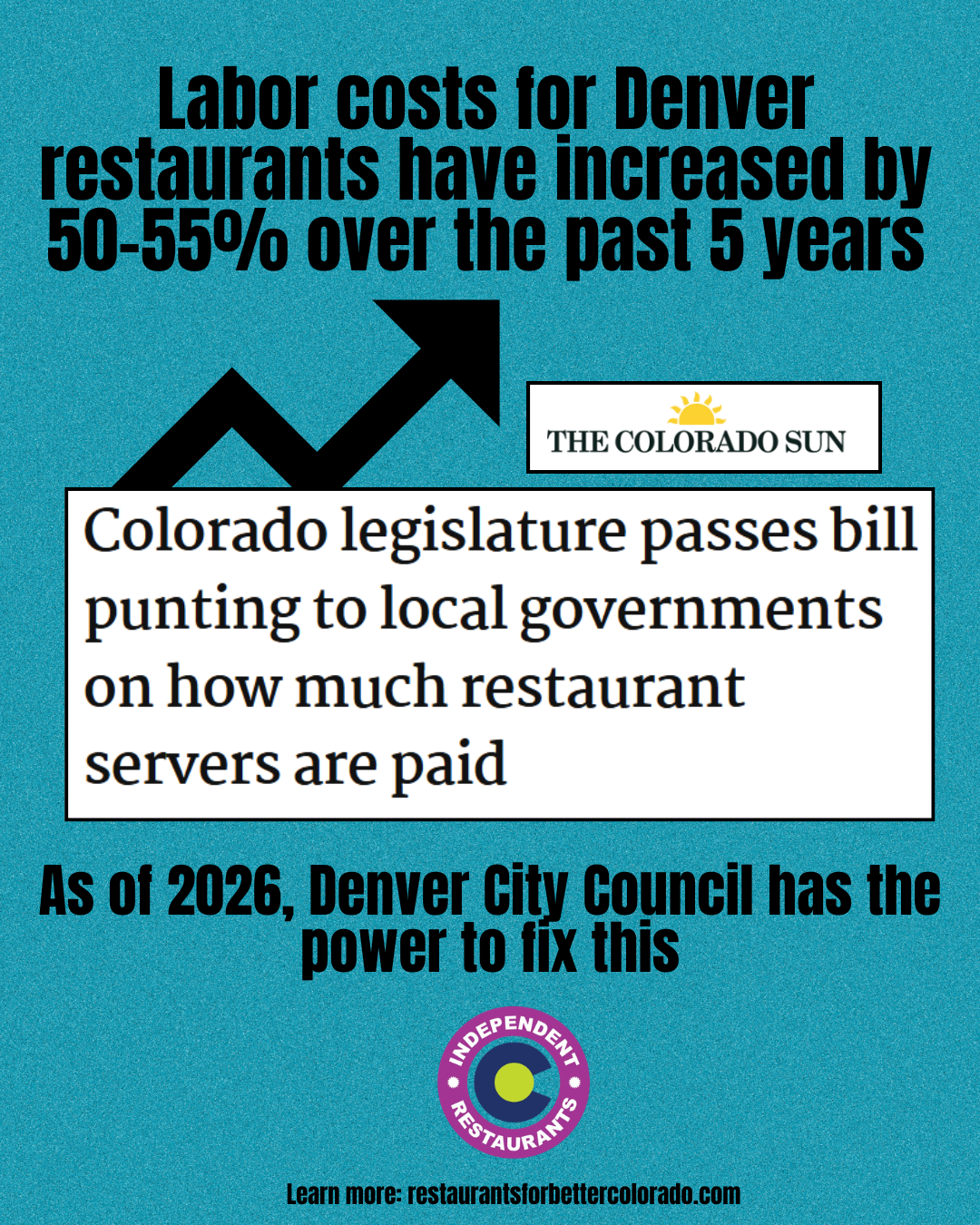
Increase in labor costs since 2019
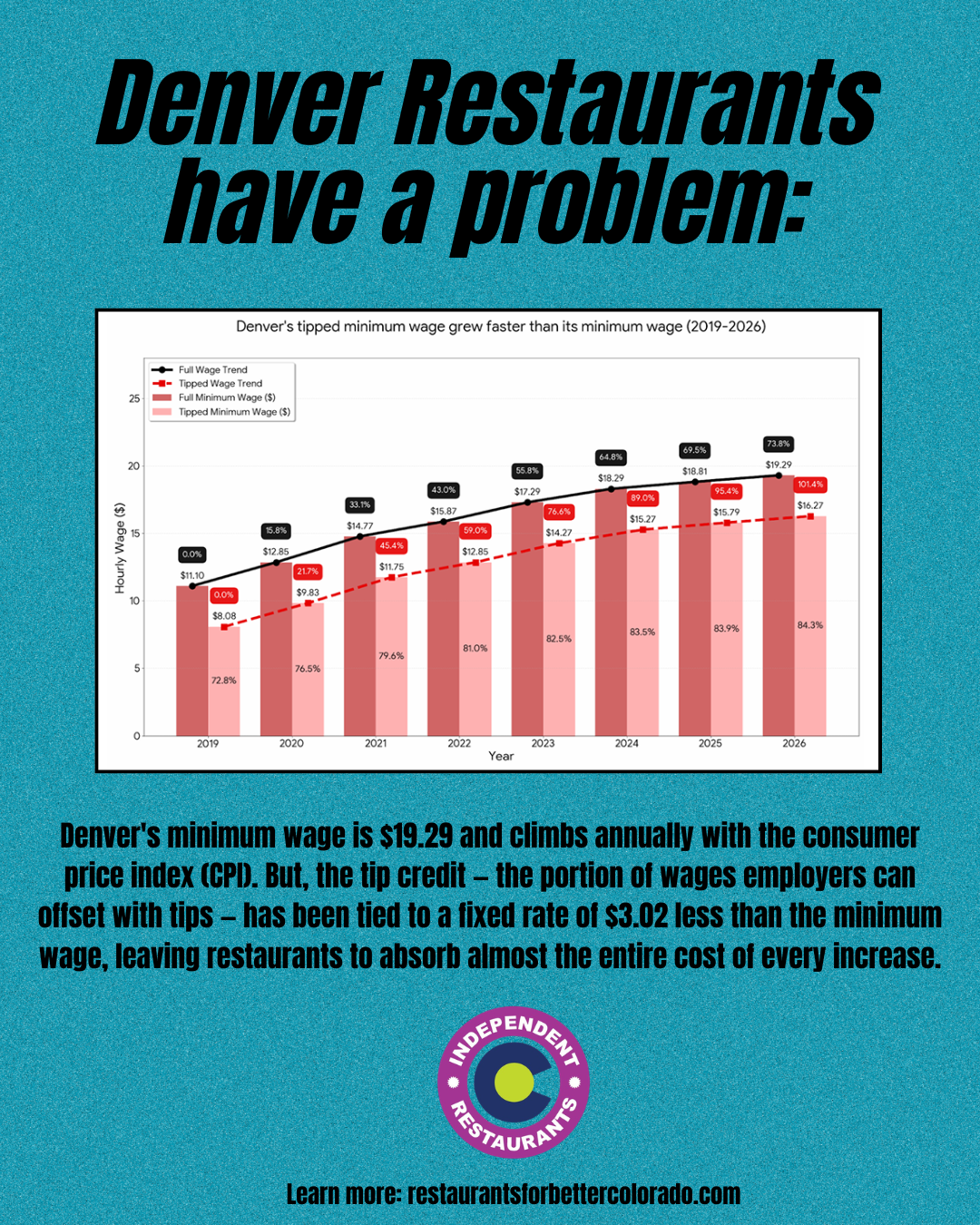
Labor costs are the largest and fastest-growing expense category for Denver restaurants. Denver's tipped minimum wage has increased 95% in just five years — significantly faster than the overall minimum wage increase of 65% over the same period.
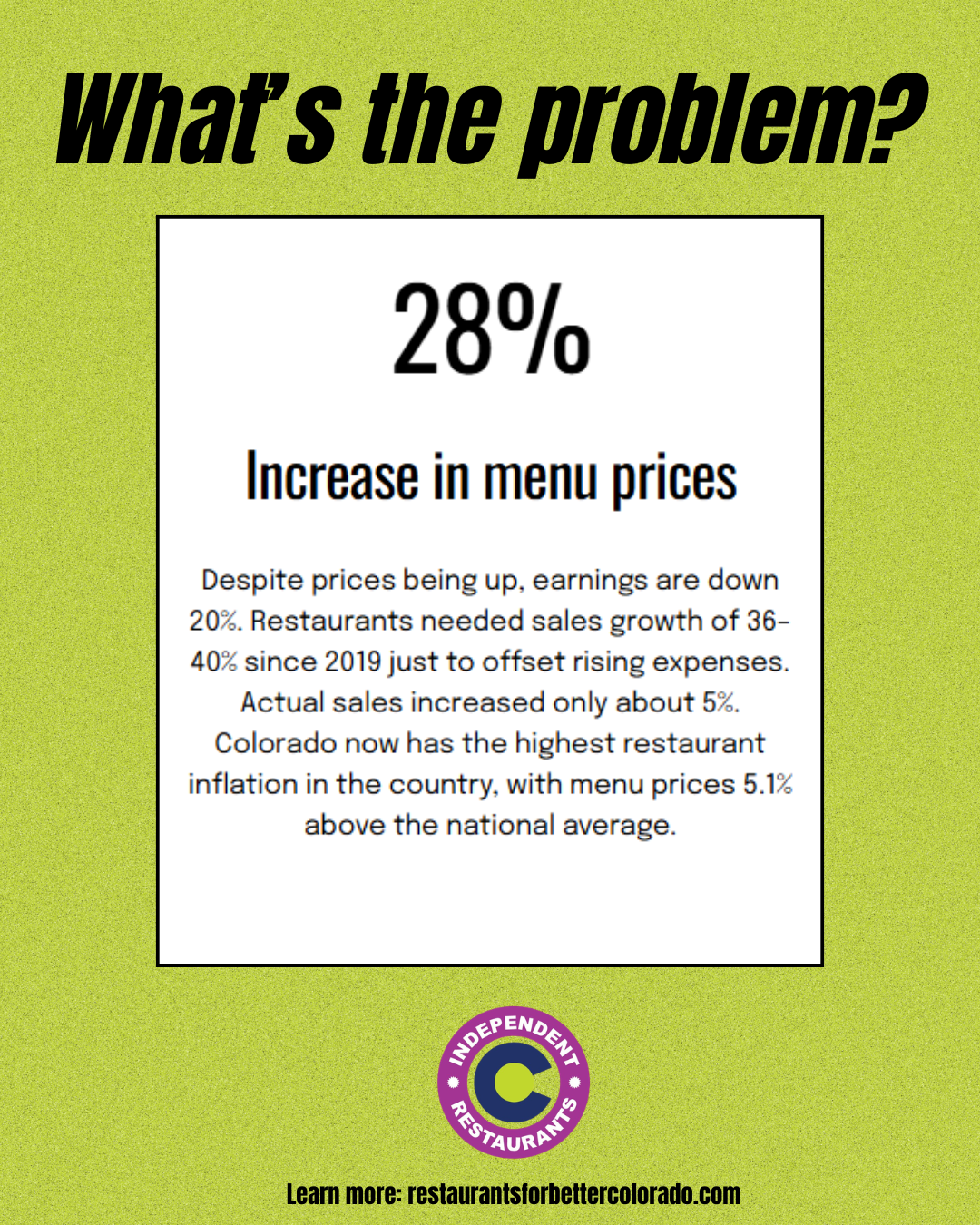
28%
Increase in menu prices
Despite prices being up, earnings are down 20%. Restaurants needed sales growth of 36–40% since 2019 just to offset rising expenses. Actual sales increased only about 5%. Colorado now has the highest restaurant inflation in the country, with menu prices 5.1% above the national average.
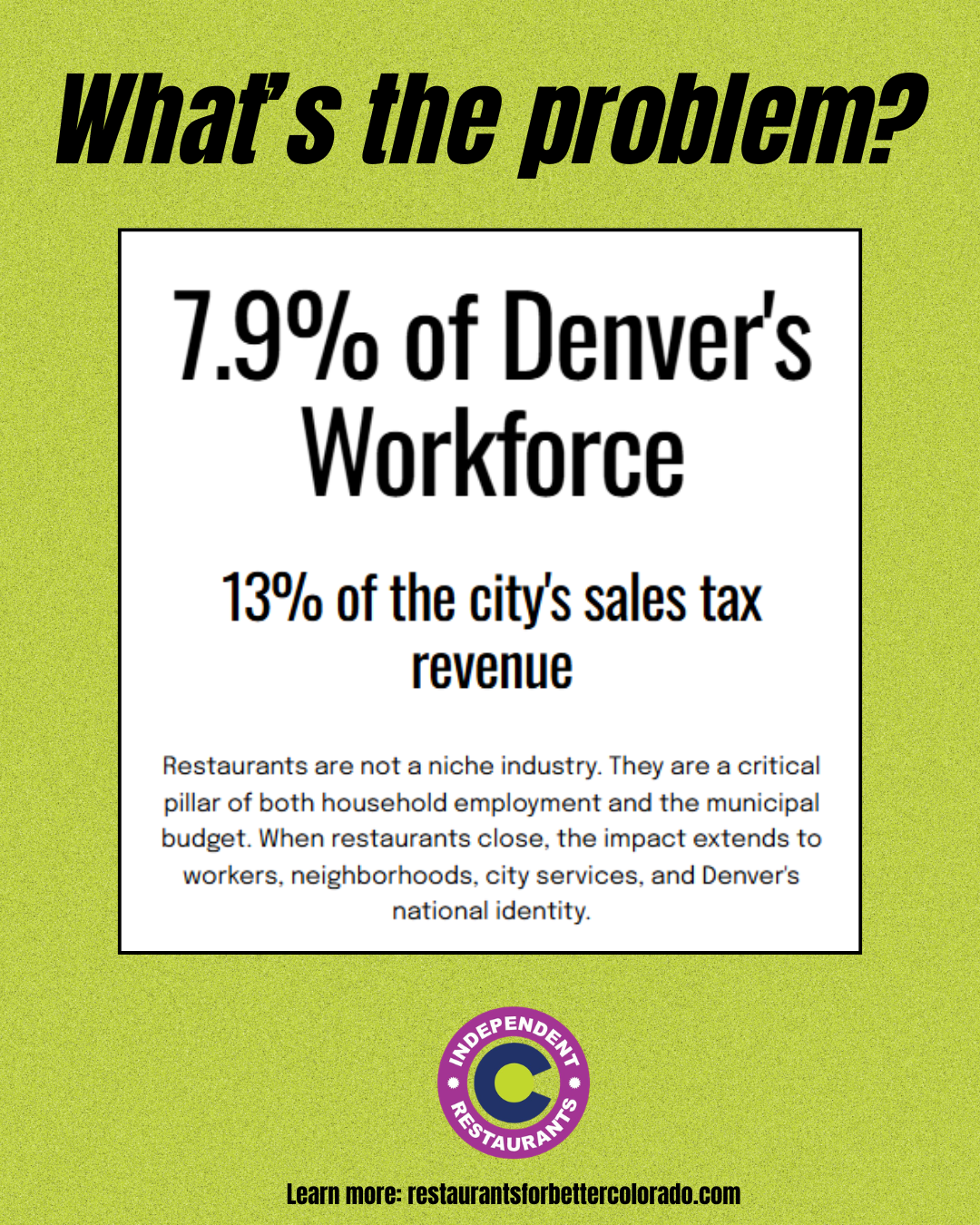
7.9% of Denver's Workforce
13% of the city's sales tax revenue
Restaurants are not a niche industry. They are a critical pillar of both household employment and the municipal budget. When restaurants close, the impact extends to workers, neighborhoods, city services, and Denver's national identity.
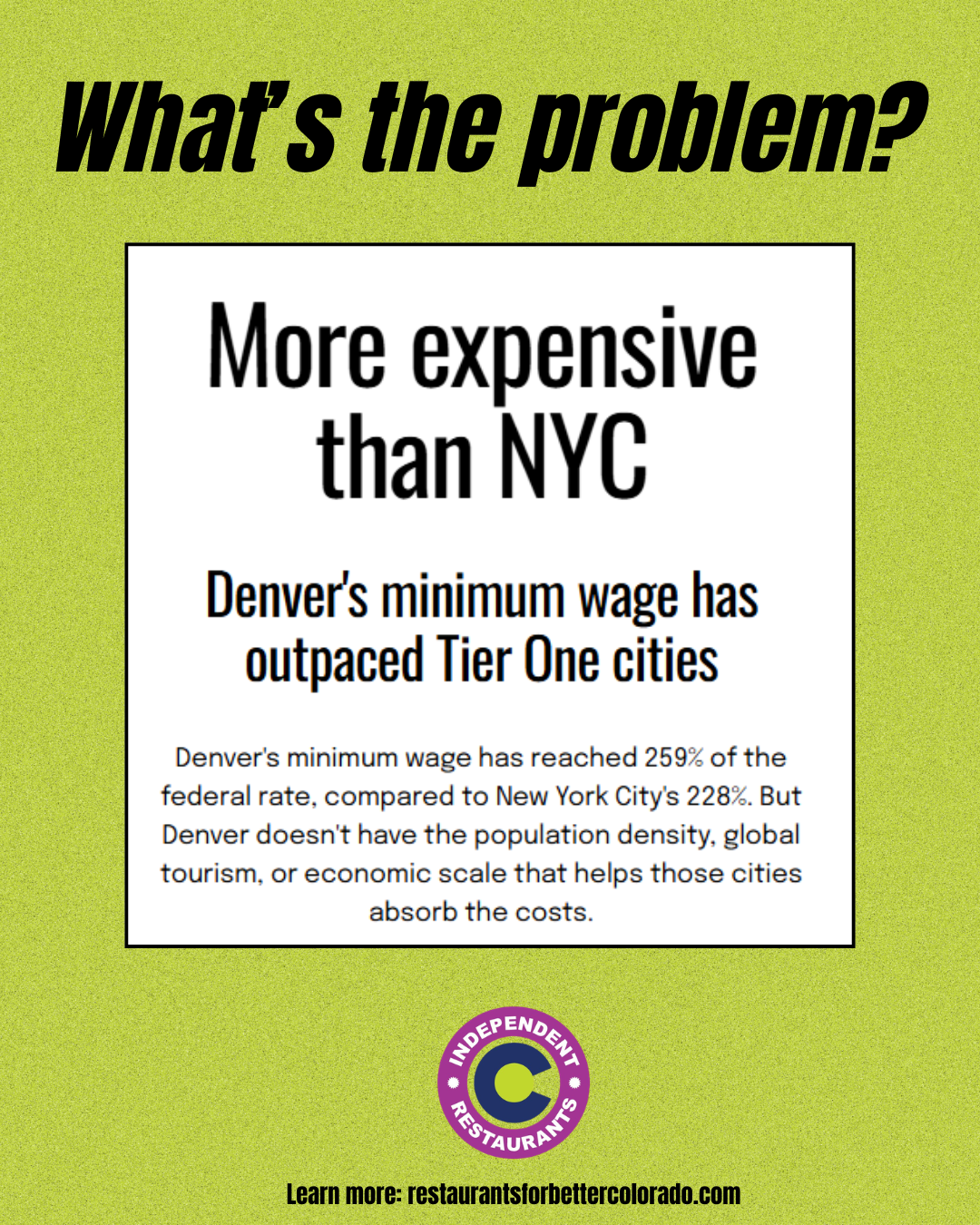
More expensive than NYC
Denver's minimum wage has outpaced Tier One cities
Denver's minimum wage has reached 259% of the federal rate, compared to New York City's 228%. But Denver doesn't have the population density, global tourism, or economic scale that helps those cities absorb the costs.
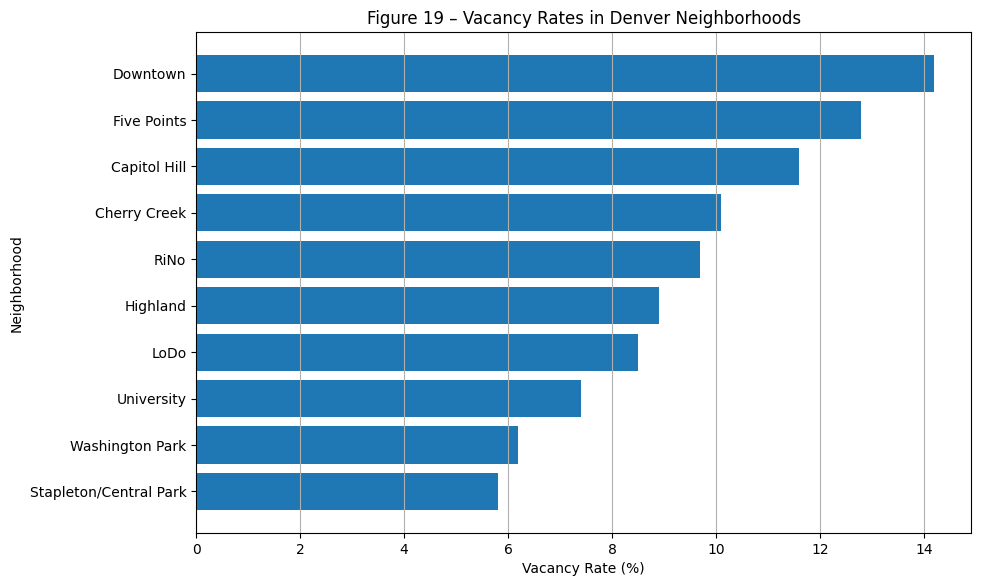
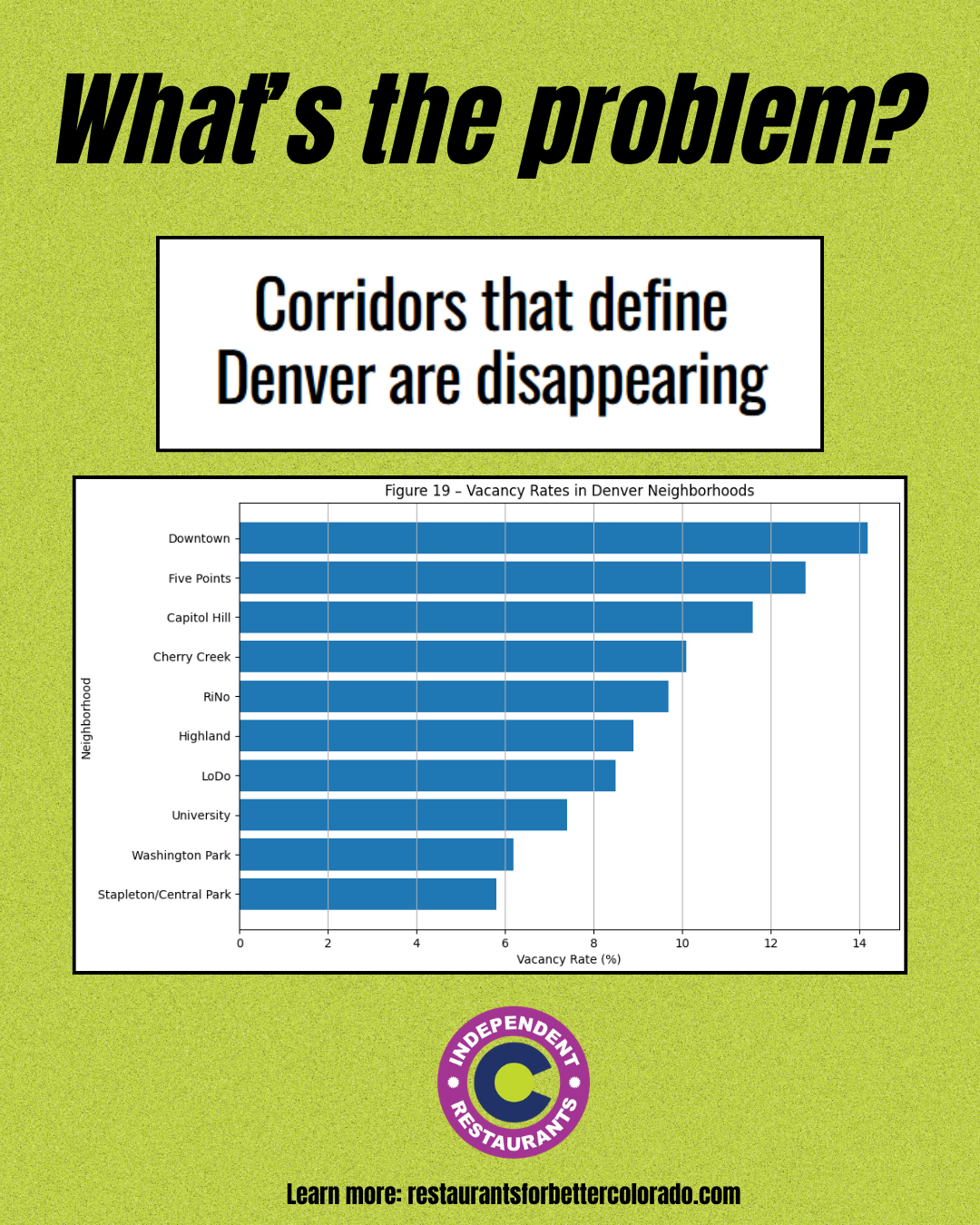
Corridors that define Denver are disappearing
Once-vibrant restaurant corridors — including RiNo, Colfax, South Broadway, Sunnyside, LoHi, and Uptown — were described as "dying" or "significantly diminished." Cherry Creek is the only submarket with near-full occupancy, but costs there are so high that only the most capitalized concepts can participate.